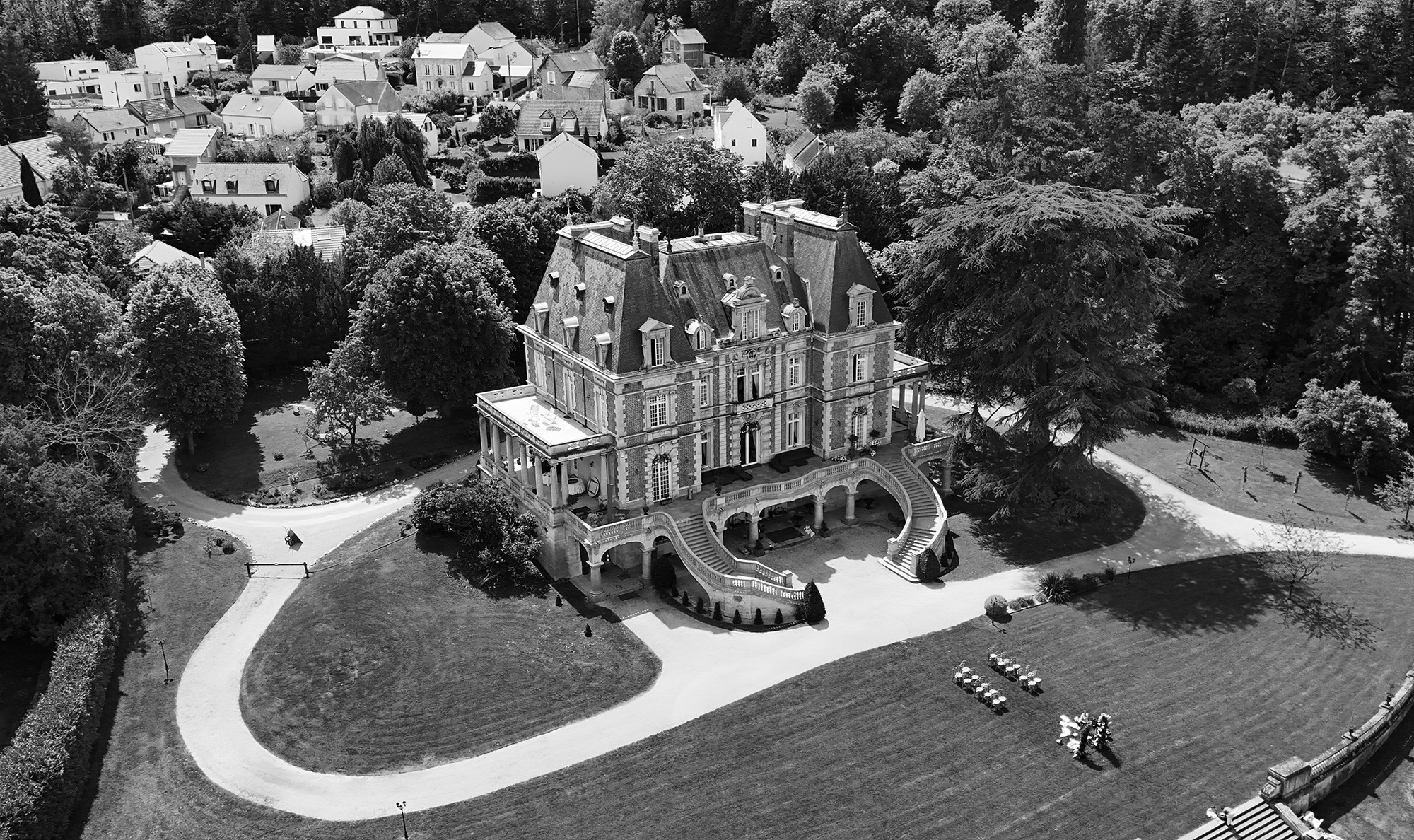
Fairytale destination wedding at Chateau Bouffemont PARIS
When Jenny and Cam told people they were getting married in Paris, the first question was always the same: how on earth do you plan that from Sydney?
Fair question. I flew over to photograph their wedding at Chateau Bouffemont, about 30 minutes north of Paris, and having now seen a Paris wedding come together from the Australian side – the planning calls at odd hours, the guest list doing 24 hours of flying, the paperwork – I want to write the post I wish existed for couples considering the same thing. Their day was proof it’s absolutely doable. Here’s how it actually works.
The venue: Chateau Bouffemont
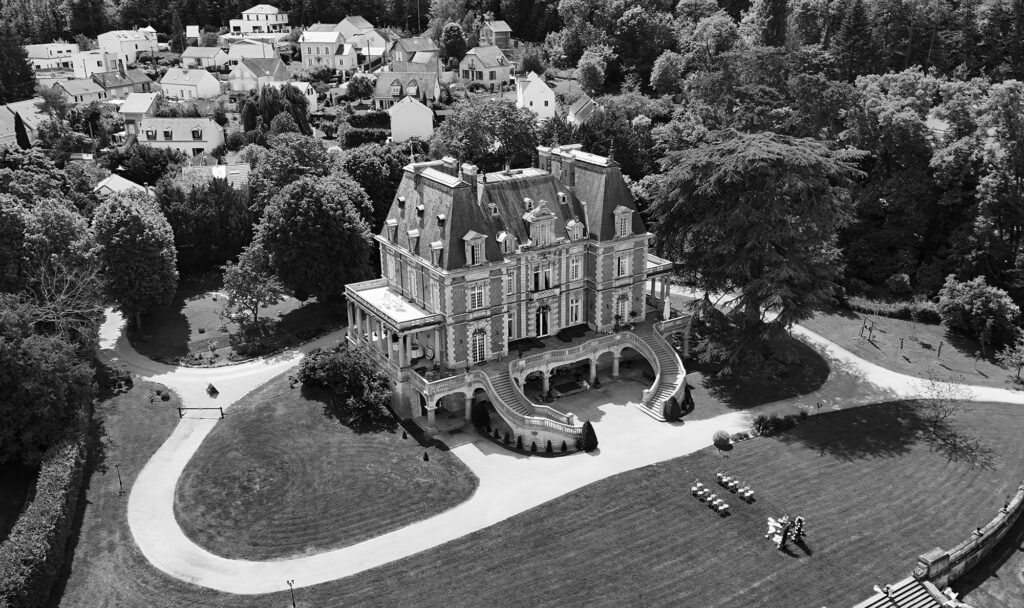
Bouffemont sits in the forest of Montmorency, close enough to Paris that your guests can stay in the city, far enough that the wedding feels like its own world. It’s a proper chateau – manicured gardens, grand stone staircases winding down to a courtyard, forest and green hills in every direction – without being a museum you’re scared to touch.
For photography, the staircases are the thing. Jenny made her entrance down them, and there is no aisle in Australia that does what a chateau staircase does. We shot portraits in the gardens in the late afternoon and never used the same backdrop twice.
If you’re venue-hunting from Australia: chateaux like this typically come with accommodation on-site or nearby, which matters more than you’d think when your entire guest list is jet-lagged.
You can’t legally marry in France (and it doesn’t matter)
This is the thing most Australian couples don’t know when they start planning. France requires at least one of you to have lived there for around 40 days before a civil ceremony – which rules out virtually every destination wedding.
The standard move, and what I’d suggest: do the legal paperwork quietly at home with a celebrant and two witnesses, then have your real wedding – the one with the dress, the vows, the people you love – in France. Nobody at Bouffemont was thinking about paperwork. The ceremony in the gardens was the wedding. The registry signing back home is admin.
(Requirements change, so confirm the current rules when you plan – but build your thinking around a symbolic ceremony in France from day one.)
Planning from 17,000 km away: get a local planner
Jenny and Cam worked with Marie from Momento Mio, a French wedding planner who specialises in exactly this – couples planning from overseas. I can’t overstate how much this is the difference between a stressful project and an actual engagement period you enjoy.
A local planner solves the three problems you can’t solve from Sydney: language (contracts and negotiations with French vendors), time zones (someone on the ground while you sleep), and taste-translation (you say “relaxed garden party”, they know which French florist actually delivers that). On the day itself, Marie ran everything so seamlessly that Jenny and Cam’s only job was to be present – which, if you’ve read anything else on this site, you’ll know is my entire philosophy of how a wedding day should feel.
Should you fly your photographer from Australia?
I’m obviously not neutral here, so let me be honest about both sides.
The case for hiring locally: it’s one less flight to pay for, and French photographers know the venues.
The case for bringing your own: your photographer is the vendor you spend the most time with on the day – from getting ready until the dance floor. Jenny and Cam and I had already built the kind of ease where they forgot the camera existed, and you can’t rebuild that over one video call with a stranger in a second language. You also get continuity: the same eye that shot your engagement session at home shoots your wedding in France, and there’s someone in every candid conversation on the day who your guests already know.
There’s also a practical bonus nobody mentions: your photographer travels with the wedding. I was there the day before, saw the spaces in the actual light, and walked the grounds with Marie – none of which is possible when you’re booking remotely.
Cost-wise, you’re covering flights and a few nights’ accommodation on top of the photography itself. For a wedding you’re already flying 50 people to, it’s a smaller line item than people expect. My fee for a destination wedding in Europe is $7,000 USD. This includes full day coverage of the wedding, 3 hour coverage of a pre or post event, and my travel expenses.
What the day actually looked like
Fifty guests made the trip from Australia, including ten kids – and that number is worth pausing on. Fifty is the sweet spot for a destination wedding: big enough that it feels like a wedding, small enough that everyone there chose to be there. That self-selection changes the energy of the entire day. There were no obligation invites at Bouffemont. Every person in those gardens had crossed the world on purpose.
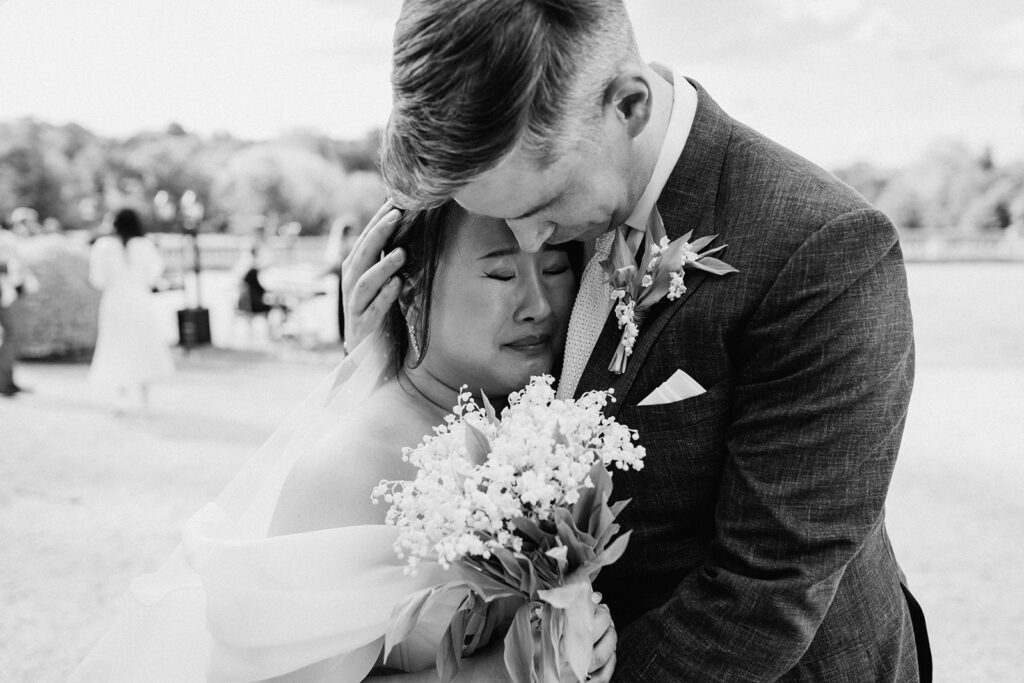
The moments I still think about: Cam’s handwritten note bringing Jenny to tears before the ceremony. Jenny – a surgeon, precise about every detail for months – finally letting go of all of it the second she saw the chateau. The two of them at the top of those staircases with fifty people they love below.
One detail worth stealing: they flew in illustrator Viola Li from Vienna, who painted live watercolour portraits of guests during the reception. Guests took home an original artwork instead of a bonbonniere. In ten years, those will still be on fridges and framed in hallways.
And the light – European summer light is a gift to a documentary photographer. The sun sets late and slow, which means golden hour lasts longer than it does at home and your reception starts before dark. If you have any say in timing, a late-spring or summer date in France is doing your photos an enormous favour.
Is a Paris wedding from Australia worth it?
Here’s what Jenny and Cam’s day taught me: a destination wedding isn’t a wedding plus travel. It’s a different kind of wedding. Multiple days with your favourite people instead of five hours. A guest list with no passengers. A setting that does half the styling for you.
It takes more planning, a local planner, and a leap of faith on the paperwork. But if the idea has its hooks in you, it’s achievable from Australia – I watched it happen.
Quick answers: Paris weddings from Australia
No – Australian passport holders can visit France visa-free for up to 90 days. Entry requirements are changing as Europe rolls out its new ETIAS travel authorisation, so have guests check the current rules a few months before flying.
Not practically – France requires around 40 days’ residency before a civil ceremony. Do the legal paperwork at home with a celebrant and two witnesses, and have your real ceremony in France. Your guests will never know the difference, because there isn’t one.
Chateaux and in-demand French planners book out 12–18 months ahead for late spring and summer dates. Lock the venue and planner first; everything else follows.
May to September for the light and the gardens. Summer sunsets in France are late and slow, which stretches golden hour and means your photos benefit enormously. July and August are peak tourist season in Paris itself, so late May, June or September is the sweet spot.
Sometimes, surprisingly. Venue and catering costs at a French chateau can compare favourably with premium Sydney venues – but flights and accommodation shift costs onto you and your guests. The real difference isn’t price, it’s shape: fewer guests, more days, and a celebration people travel for on purpose.
Yes – Paris was a long way from my usual South Coast paddocks and I loved every minute. My fee for a destination wedding in Europe is $7K USD which includes all my travel, full wedding day coverage and either 3 hours of a pre or post wedding day event.
Planning a destination wedding and want a photographer who’ll make the trip? I’d genuinely love to hear about it — get in touch.
